

Diagnostic Mould Testing for Cairns Homes
Request a Quote
Fill out the Form below
Verifying the Unseen: Why Independent Testing Matters in the Tropics
In Cairns, a musty odour is more than an inconvenience; it’s an early warning system. The persistent high humidity, especially during the wet season from November to May, creates ideal breeding grounds for mould within wall cavities, ceiling spaces, and built-in wardrobes. Our role is not remediation, it is diagnostic. We provide independent, evidence-based assessments that pinpoint the specific mould genera and moisture source, ensuring any subsequent remediation work is targeted, effective, and based on verifiable data, not guesswork.
Our process adheres to the principles outlined in the IICRC S520 standard for professional mould remediation, providing the documented evidence required for property managers, body corporates, and homeowners making informed decisions.
Our Cairns Mould Testing & Assessment Process
A visual check only tells part of the story. Our assessments are designed to uncover the full picture of a property’s health, from surface contamination to airborne spore counts.
On-Site Moisture & Thermal Inspection
Before any samples are taken, we use non-invasive moisture meters and thermal imaging cameras to map temperature and moisture differentials inside building materials. This often reveals hidden moisture from slow plumbing leaks, condensation points, or water ingress common in older Edge Hill homes or block-work properties in Mount Sheridan.
Surface Sampling (Bio-Tape & Swabs)
For visible or suspected mould colonies, we utilize bio-tape or sterile swabs. These samples are sent to an independent laboratory for microscopic analysis to identify the specific genus of mould present. This is crucial for differentiating between common allergenic moulds and more hazardous species like Stachybotrys (black mould).
Air Sampling (Spore Trap Analysis)
To assess indoor air quality, we use calibrated air sampling pumps that draw a measured volume of air across a collection cassette. This is particularly useful for detecting hidden mould sources inside wall cavities or HVAC systems. The lab analysis provides a quantitative report of spore types and concentrations per cubic meter, which we compare against outdoor baseline samples to determine if an indoor amplification event is occurring.
Differentiating Mould Types: What We Test For
Our laboratory reports provide detailed data, not just a simple “yes” or “no.” We identify and quantify common local mould types including:

Aspergillus/Penicillium
Often found on damp building materials and in air conditioning systems.
Cladosporium
A common outdoor mould that can become a problem indoors when concentrations are elevated.
Chaetomium
An indicator of significant, long-term water damage, often found on materials like drywall.
Stachybotrys
The infamous "black mould" that requires cellulose-rich materials and constant moisture to grow.
Local Testing Scenarios in Cairns & Surrounding Suburbs
Pre-Purchase Inspections in Redlynch & Bentley Park:
We provide buyers with documented assurance about a property's condition, moving beyond a standard building report to check for hidden mould linked to past water damage.
Post-Cyclone Assessments in the Northern Beaches
After significant weather events, we conduct moisture mapping and air quality testing in properties from Trinity Beach to Palm Cove to identify water intrusion before mould takes hold.
Strata & Apartment Buildings in Cairns City & Parramatta Park
Musty odours in multi-level dwellings often trace back to inter-tenancy leaks or HVAC system contamination. Our testing provides body corporates with clear, actionable data.
Queenslander Homes in Manunda & Whitfield
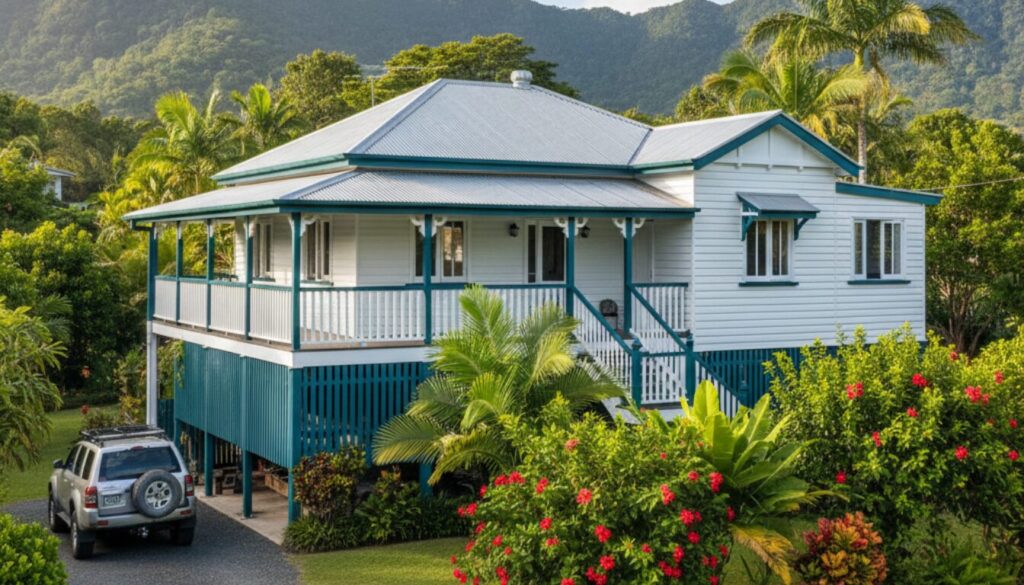
We investigate moisture issues in the sub-floor crawl spaces and ceiling voids common in high-set homes, which often suffer from inadequate ventilation.
Mould Testing FAQs for Cairns Properties
Does mould testing remove mould?
No. Our service is strictly diagnostic. We provide an independent, scientific assessment to identify the problem, its source, and its severity. This report is then used to create an accurate plan for professional remediation.
How long does an inspection take?
A typical on-site assessment and sampling visit for a standard residential property is completed within 60-90 minutes. Laboratory analysis and reporting for air and surface samples usually takes 3-5 business days.
Do I need mould testing before removal?
If mould is clearly visible and the cause is obvious, you may not. However, testing is critical when the source is unknown, you have health concerns, musty odours persist without visible mould, or you require formal documentation for a property transaction or landlord dispute.
Book a Mould Assessment in Cairns
If you have concerns about your property’s air quality or suspect hidden mould, contact our team to schedule a professional assessment.
Fill out the Form below